

Elvis, 70 anos depois: sabor “novinho”
Lançado em 19 de outubro de 1956, o segundo álbum de Elvis Presley completa sete décadas na próxima segunda-feira. Entre rock’n’roll, blues, country e baladas, um jovem de 21 anos mostrava ao mundo que ainda tinha muito a oferecer.
Não sou especialista em Elvis Presley. Mas, desde muito pequena, por volta dos nove ou dez anos, gosto de Elvis.
Meu primeiro LP foi dele. Aquele dinheirinho contado e a ida à loja de discos com a minha avó são lembranças que sempre vão estar comigo.
E aqui vai uma curiosidade: NINGUÉM OUVIA ELVIS NA MINHA CASA!
Talvez esse gosto tenha nascido em algum filme da Sessão da Tarde. Ou talvez eu simplesmente tivesse um gosto muito peculiar para uma criança.
Quando me perguntam qual é a minha música preferida dele, respondo: TODAS!
Mas qual disco? Qual época? TODAS!
Elvis é música que toca em todas as estações: amor, saudade, alegria, euforia.
Apesar de não gostar muito de toda essa tecnologia e da velocidade absurda em que estamos vivendo, agradeço a possibilidade de encontrar praticamente qualquer álbum que eu queira escutar.
E, claro, a pauta de hoje é ouvir o segundo álbum.
O ano em que Elvis conquistou o mundo
Em 1956, Elvis Presley parecia estar em todos os lugares.
Na televisão, nas rádios, nas lojas de discos e nas conversas de pais preocupados com os hábitos de seus filhos.
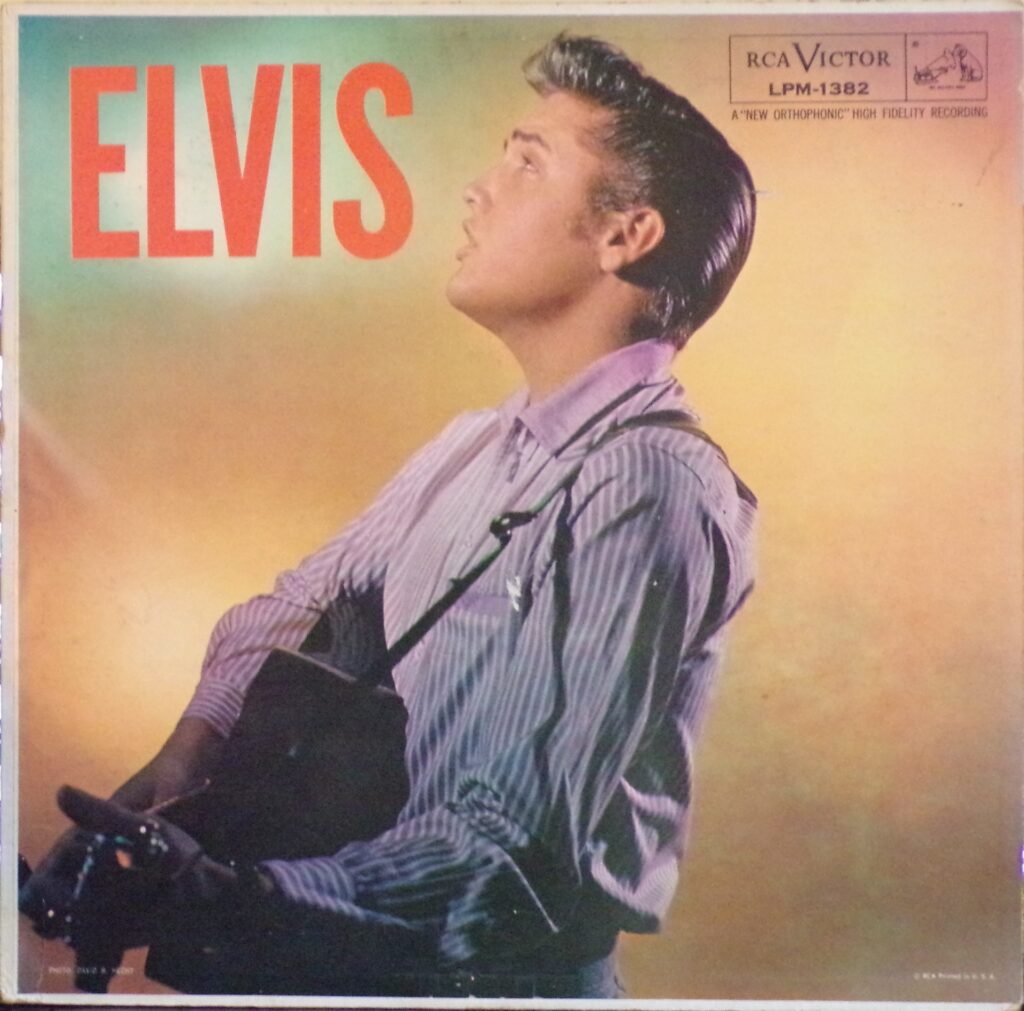
Crédito: RCA Victor / Reprodução.
O rapaz de Tupelo, Mississippi, tinha apenas 21 anos e já provocava uma revolução cultural. Seu primeiro LP, Elvis Presley, havia chegado às lojas em março daquele ano. Apenas sete meses depois, chegava o segundo.
As gravações aconteceram principalmente entre os dias 1º e 3 de setembro, no estúdio Radio Recorders, em Hollywood, com músicos que ajudaram a construir a sonoridade de Elvis: Scotty Moore na guitarra, Bill Black no contrabaixo, D. J. Fontana na bateria e o grupo vocal The Jordanaires.
O álbum, com doze faixas, alcançou o primeiro lugar na parada americana de LPs da Billboard, permanecendo quatro semanas no topo.
Mas os números são apenas parte da história.
Naqueles anos, o rock’n’roll ainda era visto por muitos adultos como uma ameaça aos bons costumes. Elvis, com seu topete, seu rebolado e uma voz que não parecia obedecer às convenções, tornou-se um dos maiores símbolos daquela transformação.
E pensar que tudo aquilo estava apenas começando.
Entre o rock, o romance e o blues
O disco abre com Rip It Up, uma explosão de energia originalmente associada a Little Richard. É o rock’n’roll em sua forma mais contagiante.
Mas logo na segunda faixa Elvis muda completamente de atmosfera.
Love Me, composta por Jerry Leiber e Mike Stoller, é uma das minhas preferidas.
A essa altura, apesar de tanto rock’n’roll, vocês já devem ter percebido: a Rocksy tem uma forte inclinação para o romance.
Obviamente, isso também se reflete nas minhas amizades: 90% são músicos ou pessoas ligadas à música.
E Elvis cantando Love Me continua sendo uma covardia com o coração de qualquer romântica.
Em Long Tall Sally, outro clássico ligado a Little Richard, consegui perceber especialmente a juventude de Elvis. Aquela voz mais encorpada e poderosa, tão característica das interpretações posteriores, ainda estava se desenvolvendo.
É interessante ouvir esse registro sabendo tudo o que viria depois. A voz já tinha personalidade, mas ainda ganharia outras dimensões ao longo dos anos.

Outra faixa que me chamou a atenção foi So Glad You’re Mine.
A composição é de Arthur “Big Boy” Crudup, um músico fundamental para a história do blues e autor de That’s All Right, canção que Elvis gravou em 1954 e que ajudou a lançá-lo.
Aqui, o piano logo no começo, acompanhado daquele tisss, tisss delicado da bateria, traz uma atmosfera que mistura blues e jazz.
Dá até para imaginar um pequeno clube em Nova Orleans, com luz baixa, um piano, um contrabaixo acústico e algumas mesas espalhadas pelo salão.
Sinceramente, consigo me imaginar sentada em uma delas, ouvindo Elvis cantar.
Uma música construída de muitas influências
A presença de So Glad You’re Mine, Long Tall Sally, Rip It Up e Ready Teddy no repertório mostra o quanto Elvis estava conectado à música negra americana.
O rock’n’roll não nasceu sozinho, nem foi inventado por um único artista. Suas raízes passam pelo blues, rhythm and blues, gospel e country, gêneros que já vinham sendo desenvolvidos por diferentes músicos e comunidades.
Elvis cresceu ouvindo essas sonoridades e desenvolveu uma maneira própria de interpretá-las, levando aquela mistura musical a um público gigantesco.
Mas o álbum também reserva espaço para momentos completamente diferentes.
Em Old Shep, uma canção sentimental sobre um menino e seu cachorro, encontramos outro lado do cantor. Longe da agitação que escandalizava a televisão americana, aparece um jovem intérprete capaz de contar uma história com delicadeza.
Essa versatilidade talvez seja uma das características mais fascinantes de sua carreira.
Um aperitivo de tudo o que ainda viria
Este segundo disco era só um tiquinho de tudo o que ele ainda faria. Uma prévia, um teaser, um aperitivo.
Toda aquela potência vocal ainda ganharia novas dimensões. O tempo, a experiência e os anos seguintes revelariam um intérprete cada vez mais maduro, capaz de transformar uma canção em algo absolutamente seu.
Setenta anos depois, continua irresistível.
Rocksy
P.S.: E eu não ousaria criticar Elvis! Quem ousaria?
🇺🇸 English Version ↓
Elvis, 70 Years Later: Still Fresh as Ever
Released on October 19, 1956, Elvis Presley’s second album turns 70 next Monday. Blending rock’n’roll, blues, country, and ballads, a 21-year-old singer was showing the world that he still had so much more to offer.
I’m no Elvis Presley expert. But I’ve loved Elvis since I was very young, around nine or ten years old.
My very first LP was an Elvis record. I still remember counting my little bit of money and going to the record store with my grandmother. Those memories will always stay with me.
And here’s something funny: NOBODY LISTENED TO ELVIS IN MY HOUSE!
Maybe I discovered him through a movie on Sessão da Tarde, Brazil’s beloved afternoon movie program. Or maybe I just had rather unusual taste for a little girl.
Whenever someone asks me which Elvis song is my favorite, my answer is: ALL OF THEM!
But which album? Which era? ALL OF THEM!
Elvis is music for every season: love, longing, happiness, and pure excitement.
As much as I dislike all this technology and the ridiculous speed at which we’re living, I’m grateful that I can find practically any album I feel like listening to.
And, of course, today’s assignment is to listen to his second album.
The Year Elvis Conquered the World
In 1956, Elvis Presley seemed to be everywhere.
On television, on the radio, in record stores, and in conversations between parents worried about their children’s behavior.
The young man from Tupelo, Mississippi, was just 21 years old and already causing a cultural revolution. His debut LP, Elvis Presley, had arrived in stores in March. Just seven months later came his second.
Most of the recordings took place between September 1 and 3 at Radio Recorders in Hollywood, with musicians who helped shape the Elvis sound: Scotty Moore on guitar, Bill Black on bass, D. J. Fontana on drums, and the vocal group The Jordanaires.
The twelve-track album reached No. 1 on Billboard’s American album chart, spending four weeks at the top.
But numbers tell only part of the story.
Back then, many adults saw rock’n’roll as a threat to good manners and traditional values. With his pompadour, his hip-shaking moves, and a voice that refused to follow the rules, Elvis became one of the greatest symbols of that cultural transformation.
And to think it was only the beginning.
Between Rock, Romance, and the Blues
The album kicks off with Rip It Up, an explosion of energy famously associated with Little Richard. It’s rock’n’roll at its most infectious.
But by the second track, Elvis completely changes the mood.
Love Me, written by Jerry Leiber and Mike Stoller, is one of my favorites.
By now, despite all the rock’n’roll, you’ve probably noticed something: Rocksy has quite a romantic streak.
Naturally, that also shows in my friendships: 90% of my friends are musicians or people connected to music.
And Elvis singing Love Me is still downright unfair to a romantic heart.
On Long Tall Sally, another classic associated with Little Richard, I could especially hear how young Elvis was. That fuller, more powerful voice, so characteristic of his later performances, was still developing.
It’s fascinating to listen to this recording knowing everything that would come later. His voice already had personality, but it would gain entirely new dimensions over the years.
Another track that caught my attention was So Glad You’re Mine.
It was written by Arthur “Big Boy” Crudup, a musician whose contribution to the history of the blues was fundamental. He also wrote That’s All Right, the song Elvis recorded in 1954 that helped launch his career.
Here, the piano at the beginning, accompanied by that delicate tss, tss of the drums, creates an atmosphere somewhere between blues and jazz.
It’s easy to imagine a little club in New Orleans, with dim lights, a piano, an upright bass, and a few tables scattered around the room.
And I can genuinely picture myself sitting at one of those tables, listening to Elvis sing.
Music Built on Many Influences
The presence of So Glad You’re Mine, Long Tall Sally, Rip It Up, and Ready Teddy on the album shows just how deeply Elvis was connected to Black American music.
Rock’n’roll didn’t appear out of nowhere, nor was it invented by a single artist. Its roots run through blues, rhythm and blues, gospel, and country — genres that had already been developed by generations of musicians and communities.
Elvis grew up listening to those sounds and developed his own way of interpreting them, bringing that musical mixture to an enormous audience.
But the album also makes room for something completely different.
On Old Shep, a sentimental song about a boy and his dog, we discover another side of the singer. Far from the excitement that scandalized American television audiences, there’s a young performer capable of telling a story with remarkable tenderness.
That versatility may be one of the most fascinating aspects of his career.
Just a Taste of What Was Yet to Come
This second album was just a tiny taste of everything Elvis would go on to do. A preview, a teaser, an appetizer.
And I wouldn’t dare criticize Elvis! I’d love to own every single one of his albums, without a doubt.
All that vocal power would continue to evolve. Time, experience, and the years ahead would reveal an increasingly mature performer, capable of making any song entirely his own.
Seventy years later, he’s still irresistible.
Rocksy
P.S. And I wouldn’t dare criticize Elvis! Who would?