Beatles, Marlene Dietrich e uma noite em que a realeza precisou sacudir as joias
Há 63 anos, quatro rapazes de Liverpool dividiram o palco com uma lenda de Hollywood. E John Lennon não perdeu a oportunidade de provocar a aristocracia britânica.
Londres, 4 de novembro de 1963.
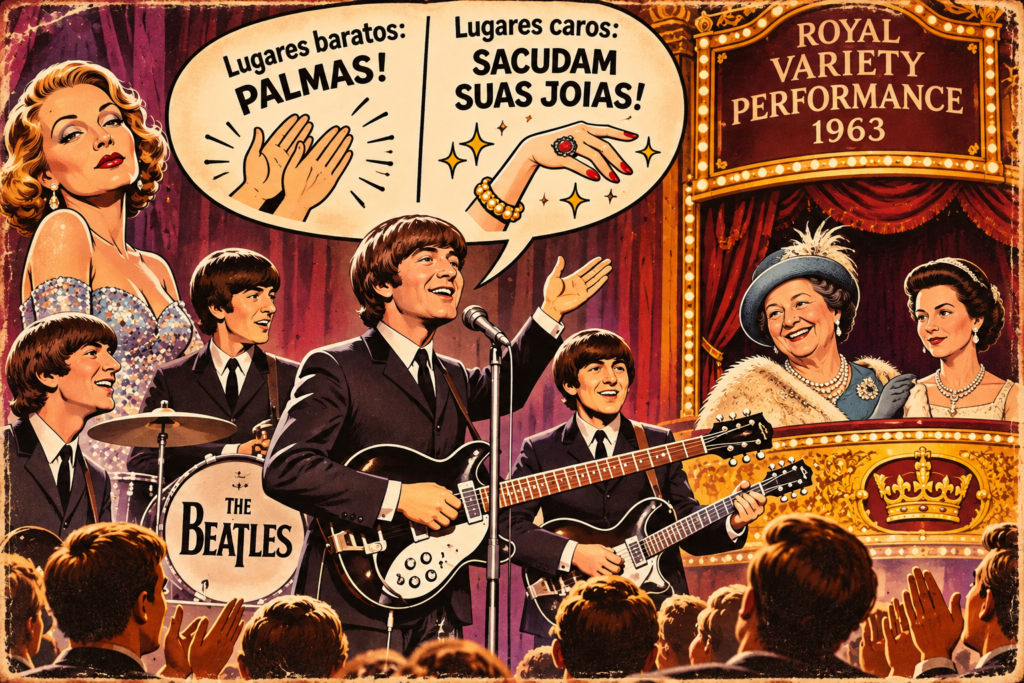
No elegante Prince of Wales Theatre, a plateia aguardava mais uma edição do tradicional Royal Variety Performance. Entre os convidados estavam a rainha-mãe Elizabeth e a princesa Margaret.
O espetáculo reunia artistas consagrados, humoristas, músicos e uma das maiores estrelas do cinema mundial: Marlene Dietrich.
Mas havia também quatro rapazes de Liverpool que, naquele momento, estavam transformando a música britânica.
John Lennon, Paul McCartney, George Harrison e Ringo Starr.
A Beatlemania já havia tomado conta do Reino Unido, mas os Beatles ainda estavam a poucos meses da explosão internacional que mudaria definitivamente a história da música popular.
Naquela noite, apresentaram quatro canções: From Me to You, She Loves You, Till There Was You e Twist and Shout.
Foi antes da última música que John Lennon resolveu quebrar o protocolo.
Pediu que as pessoas nos lugares mais baratos batessem palmas. Quanto aos ocupantes dos assentos mais caros, bastava que sacudissem suas joias.
A plateia caiu na gargalhada.
Era Lennon sendo Lennon. Irreverente, provocador e perfeitamente consciente de que uma boa piada poderia ser tão memorável quanto uma canção.
Uma diva, quatro Beatles e Burt Bacharach
Enquanto os Beatles representavam a juventude que começava a desafiar convenções, Marlene Dietrich carregava o glamour de outra época.
A atriz e cantora alemã surgiu com um vestido coberto de lantejoulas, apresentando clássicos como Honeysuckle Rose, Where Have All the Flowers Gone? e Lili Marlene.
E havia outro nome extraordinário naquela noite: Burt Bacharach, que acompanhava Dietrich como seu diretor musical.
Em um único espetáculo, encontravam-se o cinema clássico, a sofisticação da música popular e a revolução do rock’n’roll.
Ringo Starr recordaria mais tarde, na The Beatles Anthology, seu encontro com Marlene Dietrich. O baterista ficou particularmente impressionado com as pernas da atriz.
Afinal, nem mesmo um Beatle estava imune ao charme de uma estrela de Hollywood.
Quando o rock entrou pela porta da frente
A apresentação foi um triunfo. O espetáculo, exibido pela televisão britânica em 10 de novembro, alcançou aproximadamente 21 milhões de espectadores.
Os Beatles conquistaram a plateia e a atenção da imprensa.
Mas aquela noite também simbolizou algo maior: o encontro entre duas épocas da cultura popular, separadas por décadas de história, mas reunidas sob as luzes de um mesmo palco.
Marlene Dietrich representava o glamour de um mundo que os Beatles haviam crescido admirando, enquanto eles anunciavam o mundo que estava por vir.
E John Lennon, com uma única frase, mostrou que era perfeitamente possível respeitar a realeza sem levar suas joias tão a sério.
Aquela noite provavelmente arrancou até um sorriso discreto da rainha-mãe. Afinal, não era todo dia que a aristocracia britânica sacudia suas joias.
Rocksy — Juízo é bom, mas rock’n’roll é melhor.
Fontes
Royal Variety Charity — Arquivo oficial de 1963
The Beatles Bible — Royal Variety Performance, 1963
🇬🇧 ENGLISH VERSION
The Beatles, Marlene Dietrich and the Night Royalty Was Asked to Rattle Its Jewellery
Sixty-three years ago, four young men from Liverpool shared the stage with a Hollywood legend. And John Lennon couldn’t resist the opportunity to tease the British aristocracy.
London, 4 November 1963.
At the elegant Prince of Wales Theatre, the audience gathered for another edition of the traditional Royal Variety Performance. Among the distinguished guests were Queen Elizabeth, the Queen Mother, and Princess Margaret.
The evening brought together established entertainers, comedians, musicians and one of cinema’s greatest stars: Marlene Dietrich.
But there were also four young men from Liverpool who were already transforming British music.
John Lennon, Paul McCartney, George Harrison and Ringo Starr.
Beatlemania had already swept across Britain, but the Beatles were still just a few months away from the international explosion that would change popular music forever.
That evening, they performed four songs: From Me to You, She Loves You, Till There Was You and Twist and Shout.
It was just before the final number that John Lennon decided to break with protocol.
He invited those in the cheaper seats to clap their hands. As for the people in the more expensive seats, they could simply rattle their jewellery.
The audience burst into laughter.
It was Lennon being Lennon. Irreverent, provocative and perfectly aware that a well-timed joke could be just as memorable as a song.
A Diva, Four Beatles and Burt Bacharach
While the Beatles represented a younger generation beginning to challenge convention, Marlene Dietrich embodied the glamour of another era.
The German actress and singer appeared in a glittering, sequinned gown, performing classics such as Honeysuckle Rose, Where Have All the Flowers Gone? and Lili Marlene.
And there was another extraordinary name associated with that evening: Burt Bacharach, who worked as Dietrich’s musical director.
In a single performance, classic cinema, the sophistication of popular music and the rock’n’roll revolution came together.
Ringo Starr would later recall his encounter with Marlene Dietrich in The Beatles Anthology. The drummer was particularly impressed by the actress’s legs.
After all, not even a Beatle was immune to the charms of a Hollywood star.
When Rock’n’Roll Walked Through the Front Door
The performance was a triumph. Broadcast on British television on 10 November, the show attracted approximately 21 million viewers.
The Beatles won over the audience and captured the attention of the press.
But that evening also symbolised something greater: the meeting of two eras of popular culture, separated by decades of history yet brought together beneath the lights of the same stage.
Marlene Dietrich represented the glamour of a world the Beatles had grown up admiring, while they heralded the world that was yet to come.
And John Lennon, with a single remark, demonstrated that it was perfectly possible to respect royalty without taking its jewellery quite so seriously.
That evening probably even brought a discreet smile to the Queen Mother’s face. After all, it wasn’t every day that the British aristocracy found itself rattling its jewellery.
Rocksy — Good manners are fine, but rock’n’roll is better.
Sources
Royal Variety Charity — Official Archive, 1963