

Forgotten 90’s | #02 — Blues Traveler: Run-around?
Do sucesso de Run-Around às turnês atuais, a história de uma banda que pode ter saído das paradas, mas nunca desapareceu da memória de quem viveu os anos 90.
Uma gaita, uma pista de dança e muitas lembranças
Antes de comprar meu primeiro CD do Blues Traveler, nos Estados Unidos, em 1998, eu já tinha uma história com a banda.
Eu tinha 17, 18 anos e frequentava um pequeno bar chamado Ilhéus, no centro de Florianópolis. Era a época dos amigos da escola, das noites que pareciam não ter fim e de uma pequena pista de dança onde cabia muito mais gente do que o espaço comportava.
O DJ tinha um repertório que parecia feito sob medida para nós: U2, Hootie & the Blowfish, Blues Traveler e outras bandas que ajudaram a construir a trilha sonora daquela geração.
Mas havia uma música especial.
Bastavam os primeiros acordes de Run-Around para todo mundo abandonar o que estava fazendo e correr para a pista.
Dê o play: Blues Traveler – Run-Around (1995)
Dançávamos até o bar fechar. O suor escorrendo, o cabelo molhado, a música alta e aquela sensação maravilhosa de que não existia nada mais importante naquele momento.
Depois vinha a aventura de voltar para casa.
Não existia Uber, e táxi era um luxo que não cabia no orçamento de adolescentes. Muitas vezes, saíamos do bar às duas ou três da manhã e esperávamos até as sete pelo primeiro ônibus.
Hoje, provavelmente, eu não repetiria a experiência. Mas, naquela época, fazia parte da diversão.
O tempo passou, as amizades tomaram rumos diferentes e muita coisa mudou. Mas basta ouvir aquela gaita novamente para que a pequena pista de dança do Ilhéus reapareça, intacta, na minha memória.
De Florianópolis para uma loja de discos americana
Quando me mudei para os Estados Unidos, em 1998, encontrei nas lojas de discos muitos dos álbuns que fizeram parte da minha adolescência.
Eram artistas que eu conhecia pelas músicas, mas cujos CDs nem sempre eram fáceis de encontrar no Brasil, especialmente fora das lojas especializadas em importados.
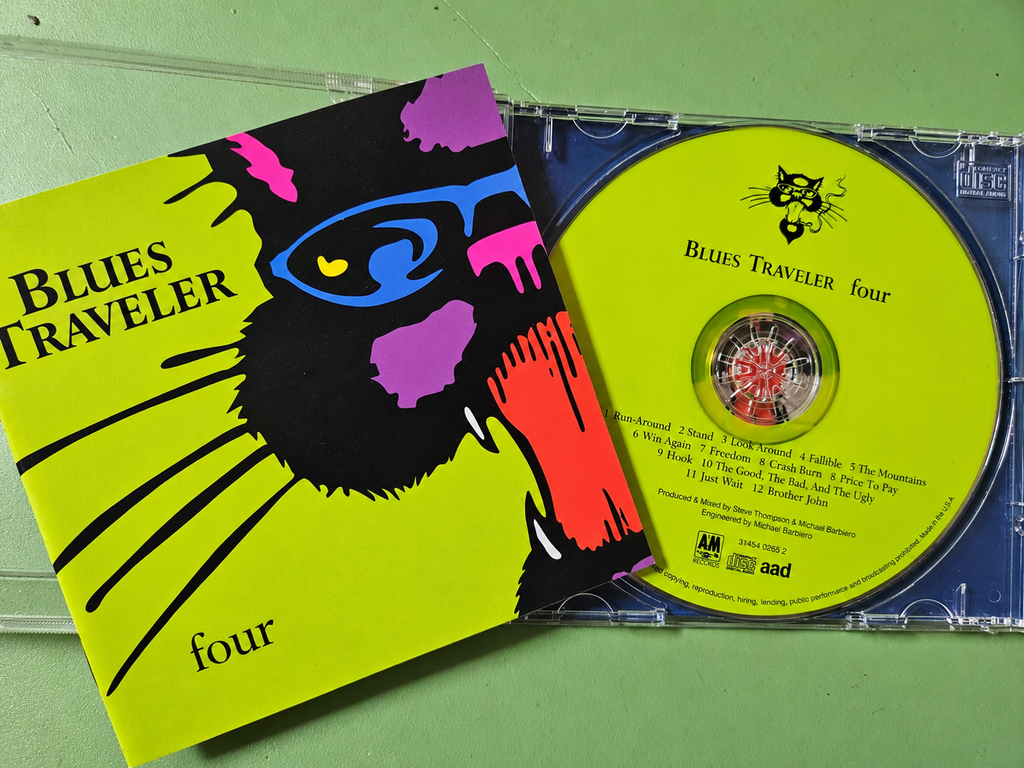
Foi assim que comprei Four, o quarto álbum do Blues Traveler, lançado em 1994 e responsável por transformar a banda em um fenômeno comercial.
Vinte e oito anos depois, o CD continua comigo, com caixinha e encarte originais.
Como dizia minha avó: quem guarda, tem.
E eu guardei muito mais do que um disco.
Do porão ao estrelato
O Blues Traveler nasceu em Princeton, Nova Jersey, em 1987, reunindo quatro jovens músicos: John Popper, Chan Kinchla, Bobby Sheehan e Brendan Hill.
Com uma mistura de blues, rock e improvisações, a banda conquistou espaço no circuito americano de apresentações ao vivo.
John Popper, com sua voz marcante e um domínio impressionante da gaita, tornou-se a figura mais reconhecida do grupo.
O álbum trouxe Run-Around e Hook, dois dos maiores sucessos do grupo. Em 1996, Run-Around conquistou o Grammy de Melhor Performance de Rock por Duo ou Grupo com Vocais.
O Blues Traveler também teve papel importante na criação do festival itinerante H.O.R.D.E., que reuniu artistas ligados ao rock e à tradição das jam bands americanas.
Uma perda no caminho
Em agosto de 1999, o Blues Traveler enfrentou um dos momentos mais difíceis de sua trajetória.
O baixista e integrante fundador Bobby Sheehan morreu aos 31 anos, vítima de uma overdose acidental.
A banda decidiu continuar.
Tad Kinchla, irmão do guitarrista Chan Kinchla, assumiu o baixo, enquanto o tecladista Ben Wilson passou a integrar a formação.
Por onde anda o Blues Traveler?
Ao contrário do que muita gente pode imaginar, o Blues Traveler nunca encerrou suas atividades.
O grupo continuou gravando e fazendo apresentações, mesmo depois de deixar de ocupar o espaço que tinha nas rádios comerciais durante os anos 90.
Em 2021, lançou Traveler’s Blues, álbum de releituras de clássicos do blues que recebeu uma indicação ao Grammy.
Em 2023, veio Traveler’s Soul, explorando influências do soul e do rhythm and blues.
Em 2026, a banda continua em atividade, com apresentações nos Estados Unidos.
John Popper permanece à frente do grupo, acompanhado por Chan Kinchla, Brendan Hill, Tad Kinchla e Ben Wilson.
Quem guarda, tem
Algumas bandas desaparecem das paradas. Outras deixam de frequentar as grandes manchetes. Mas isso não significa que tenham deixado de fazer música.
O Blues Traveler é um desses casos.
E talvez seja justamente essa a proposta de Forgotten 90’s: reencontrar artistas que marcaram uma geração e descobrir o que aconteceu com eles depois que os holofotes mudaram de direção.
No meu caso, basta colocar Run-Around para tocar.
A gaita começa, a memória desperta e, por alguns minutos, estou novamente naquela pequena pista de dança, em Florianópolis, com 17 anos e uma noite inteira pela frente.
Rocksy — Good manners, bad ideas.
Foto: álbum Four, do Blues Traveler. Exemplar adquirido nos Estados Unidos em 1998. Acervo pessoal Rocksy.
🇬🇧 English Version ↓
Forgotten 90’s | #02 — Blues Traveler: Run-around?
From the success of “Run-Around” to their latest tours, the story of a band that may have disappeared from the charts but never faded from the memories of those who lived through the 1990s.
A Harmonica, a Dance Floor, and a Lifetime of Memories
Before buying my first Blues Traveler CD in the United States in 1998, I already had a history with the band.
I was 17 or 18 years old and used to hang out at a small bar called Ilhéus, in downtown Florianópolis, Brazil. Those were the days of school friends, seemingly endless nights, and a tiny dance floor that somehow managed to accommodate far more people than it should have.
The DJ played a soundtrack that seemed tailor-made for us: U2, Hootie & the Blowfish, Blues Traveler, and other bands that helped define the music of our generation.
But there was one song in particular.
As soon as the opening notes of Run-Around started playing, everyone would drop whatever they were doing and rush to the dance floor.
We danced until the bar closed. Sweat running down our faces, hair soaking wet, music blasting, and that wonderful feeling that nothing else in the world mattered at that moment.
Then came the adventure of getting home.
There was no Uber back then, and taxis were a luxury that didn’t fit into a teenager’s budget. More often than not, we’d leave the bar at two or three in the morning and wait until seven for the first bus.
Would I do that today? Probably not. But back then, it was all part of the fun.
Time passed, friendships took different paths, and a lot of things changed. Yet all it takes is hearing that harmonica again for the tiny dance floor at Ilhéus to come back to life, perfectly preserved in my memory.
From Florianópolis to an American Record Store
When I moved to the United States in 1998, I discovered record stores filled with albums that had been part of my teenage years.
I knew many of those artists through their songs, but finding their CDs in Brazil wasn’t always easy, especially outside stores specializing in imports.
That’s how I ended up buying Four, Blues Traveler’s fourth studio album, released in 1994, which turned the band into a commercial phenomenon.
Twenty-eight years later, I still have that CD, complete with its original jewel case and booklet.
As my grandmother used to say, “If you keep it, you’ll have it.”
And I kept much more than just a record.
From the Basement to Stardom
Blues Traveler was formed in Princeton, New Jersey, in 1987, bringing together four young musicians: John Popper, Chan Kinchla, Bobby Sheehan, and Brendan Hill.
Blending blues, rock, and improvisation, the band gradually established itself on the American live music circuit.
With his distinctive voice and extraordinary command of the harmonica, John Popper became the group’s most recognizable figure.
The album Four delivered two of their biggest hits, Run-Around and Hook.
In 1996, Run-Around earned Blues Traveler a Grammy Award for Best Rock Performance by a Duo or Group with Vocal.
The band also played an important role in creating the traveling H.O.R.D.E. festival, which brought together artists connected to rock and the American jam-band tradition.
A Tragic Loss
In August 1999, Blues Traveler faced one of the most difficult moments in its history.
Founding member and bassist Bobby Sheehan died at the age of 31 from an accidental drug overdose.
The band decided to carry on.
Tad Kinchla, brother of guitarist Chan Kinchla, took over on bass, while keyboardist Ben Wilson joined the lineup.
Where Is Blues Traveler Now?
Contrary to what some might imagine, Blues Traveler never called it quits.
The group continued recording albums and performing live, even after fading from the commercial radio spotlight it had enjoyed during the 1990s.
In 2021, the band released Traveler’s Blues, an album featuring reinterpretations of blues classics that earned a Grammy nomination.
Two years later came Traveler’s Soul, exploring influences from soul and R&B.
In 2026, Blues Traveler remains active, performing across the United States.
John Popper continues to front the band alongside Chan Kinchla, Brendan Hill, Tad Kinchla, and Ben Wilson.
Some Things Are Worth Keeping
Fading from the spotlight doesn’t necessarily mean disappearing from music.
Blues Traveler is one of those bands that kept creating, even after the charts turned their attention elsewhere.
And perhaps that’s exactly what Forgotten 90’s is all about: rediscovering the artists who defined a generation and finding out what happened to them when the spotlight moved on.
As for me, all I have to do is play Run-Around.
The harmonica kicks in, memories come flooding back, and for a few minutes, I’m 17 again, standing on that tiny dance floor in Florianópolis, with an entire night ahead of me.
Rocksy — Good manners, bad ideas.
Photo: Four (1994), by Blues Traveler. Original CD purchased in the United States in 1998. From Rocksy’s personal collection.